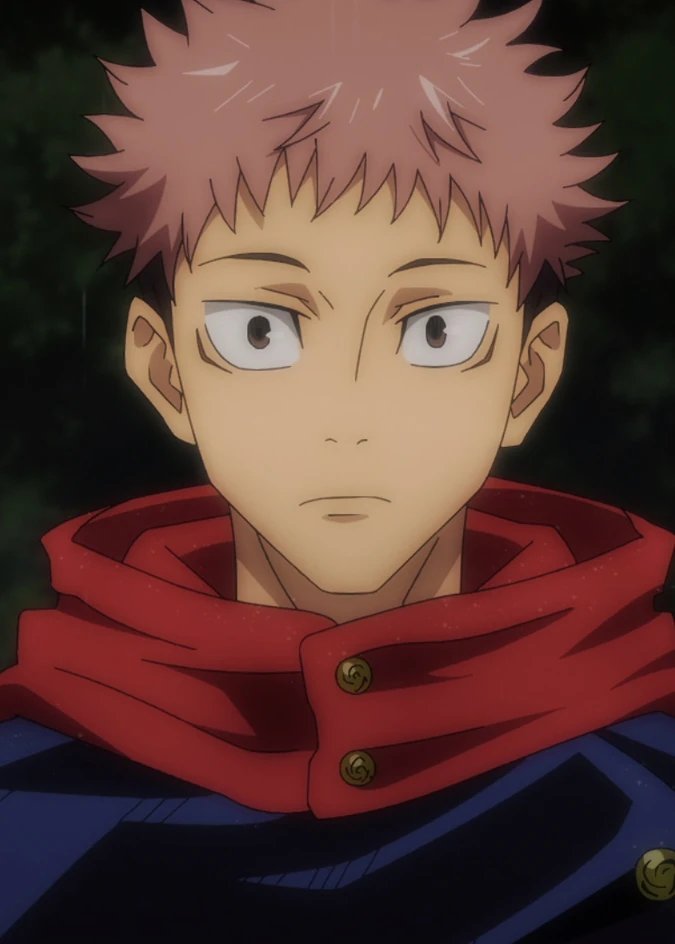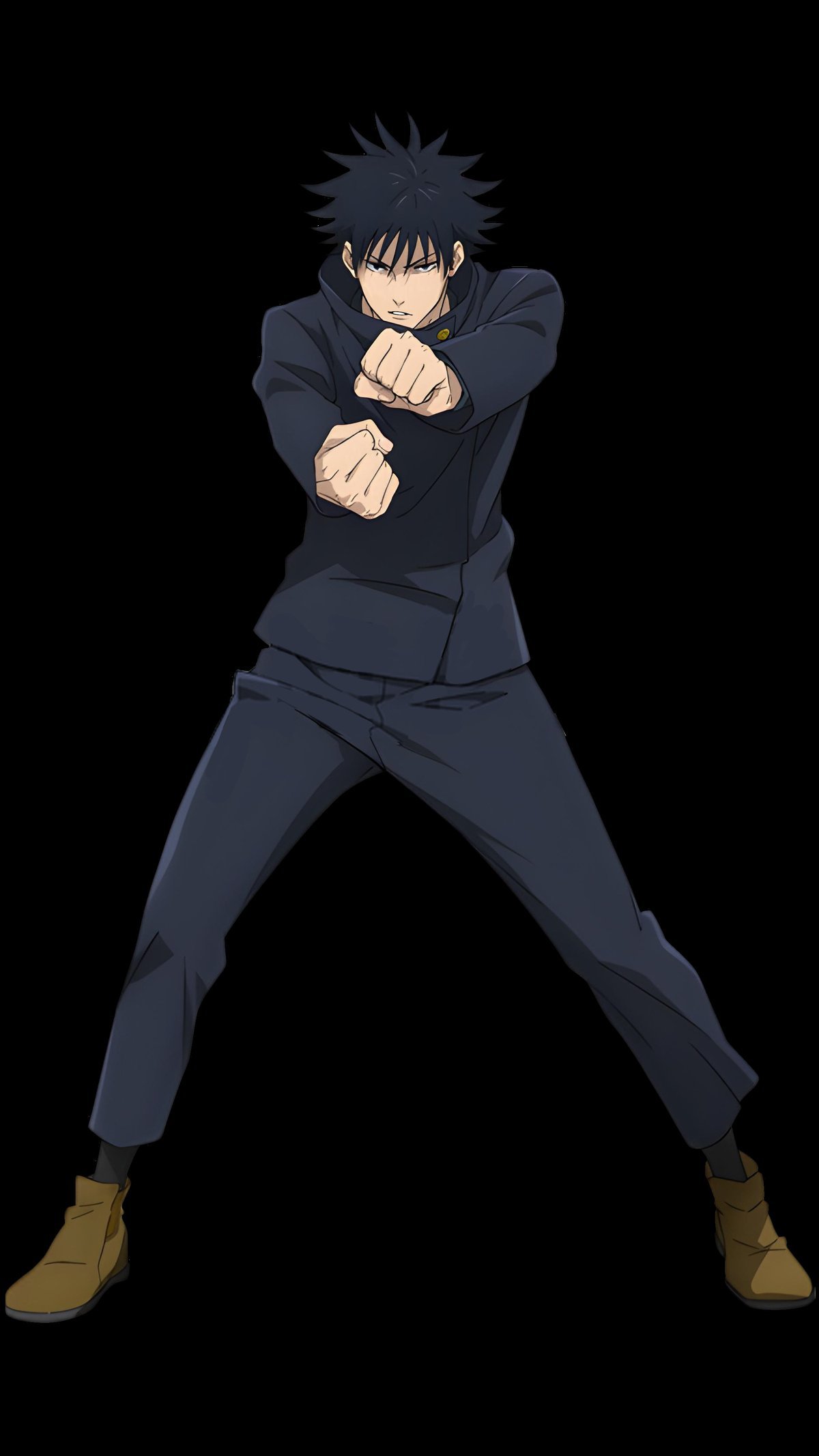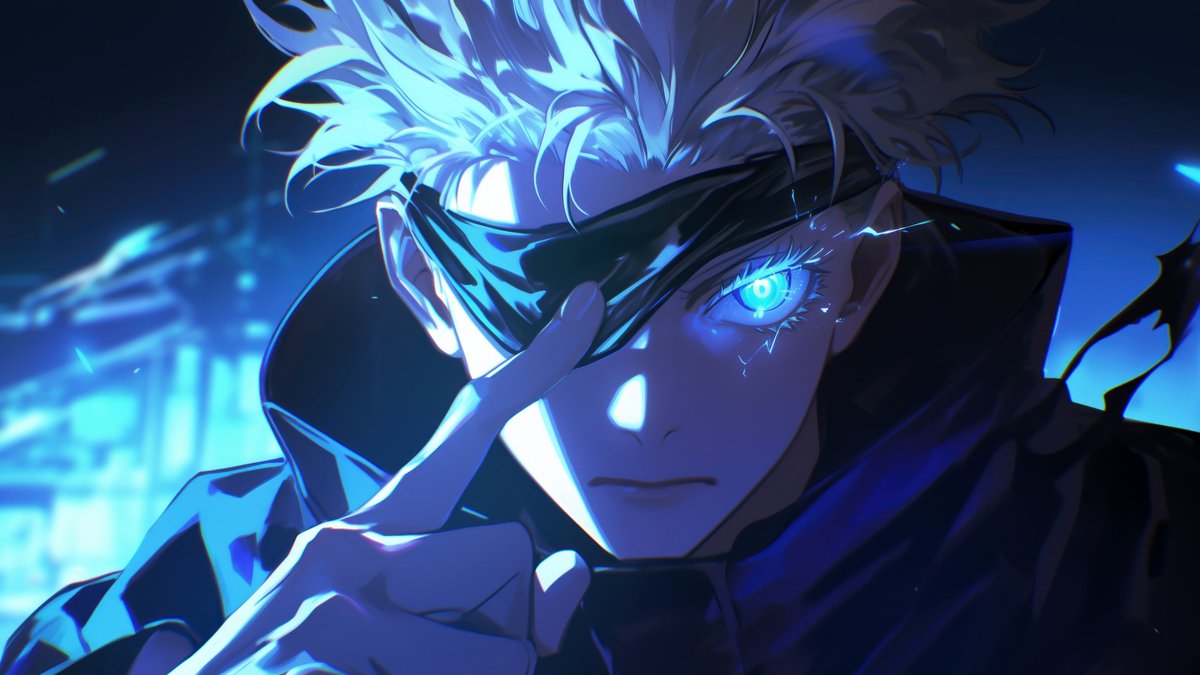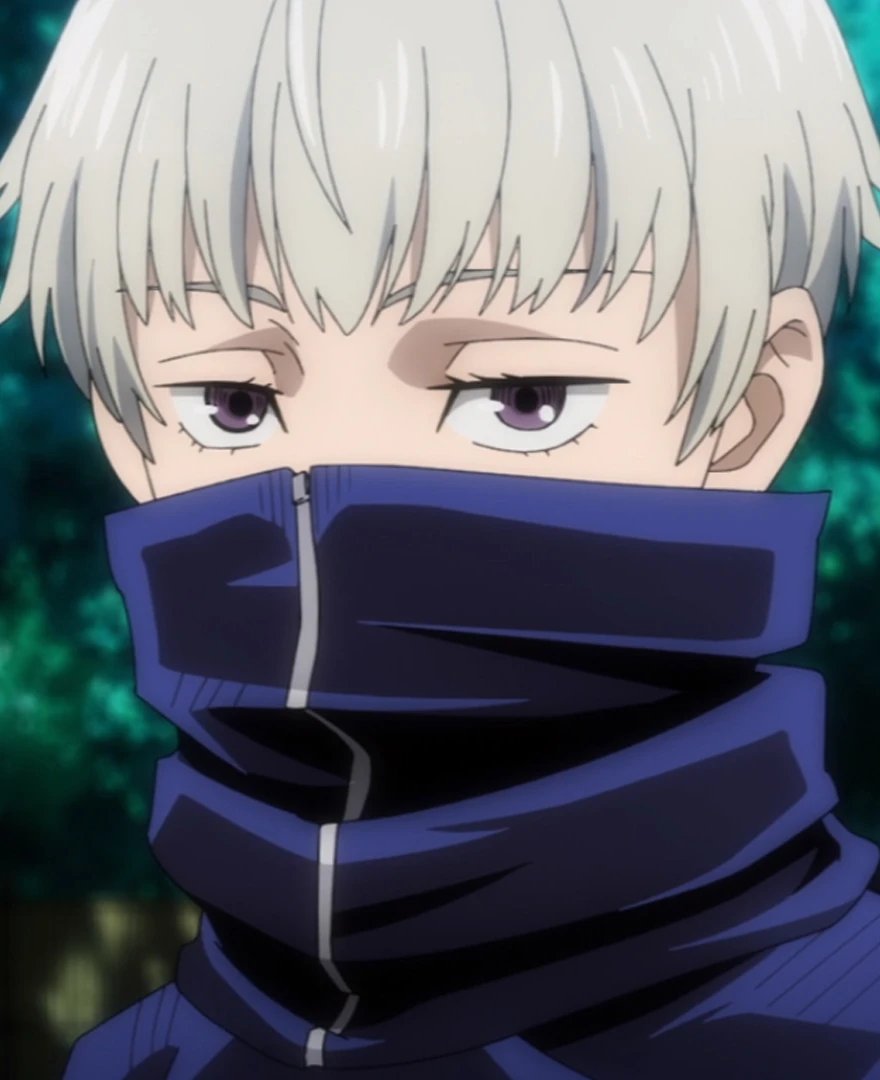
Character Overview
Nobara Kugisaki is a first-year student at Tokyo Jujutsu High and the female lead of Jujutsu Kaisen. Unlike many female characters in shonen manga who are written as support for the male protagonist, Nobara is introduced as a fully-formed, unapologetically confident fighter who leaves her small village specifically to become a jujutsu sorcerer in Tokyo. She wields the Straw Doll Technique, a cursed ability that uses a hammer, nails, and a straw effigy to transfer damage from her target to a medium. Nobara fights with the same level of independence and ambition as her male peers, and the narrative never treats her as needing protection.
What makes Nobara crucial to the story is her philosophy. She represents a middle ground between Yuji's idealism and Megumi's self-sacrifice. Nobara believes in self-love as the foundation of strength — she fights for herself first, and that self-worth is what allows her to fight effectively for others. Her worldview is best expressed in her own words during her introduction: "I like myself. I like myself more than anyone else. That's not selfish. It's strength." This philosophy is radical in the context of jujutsu sorcery, where self-sacrifice is often treated as the highest virtue. Nobara rejects that premise entirely, arguing that a sorcerer who does not value their own life cannot truly protect others.
Appearance and Design
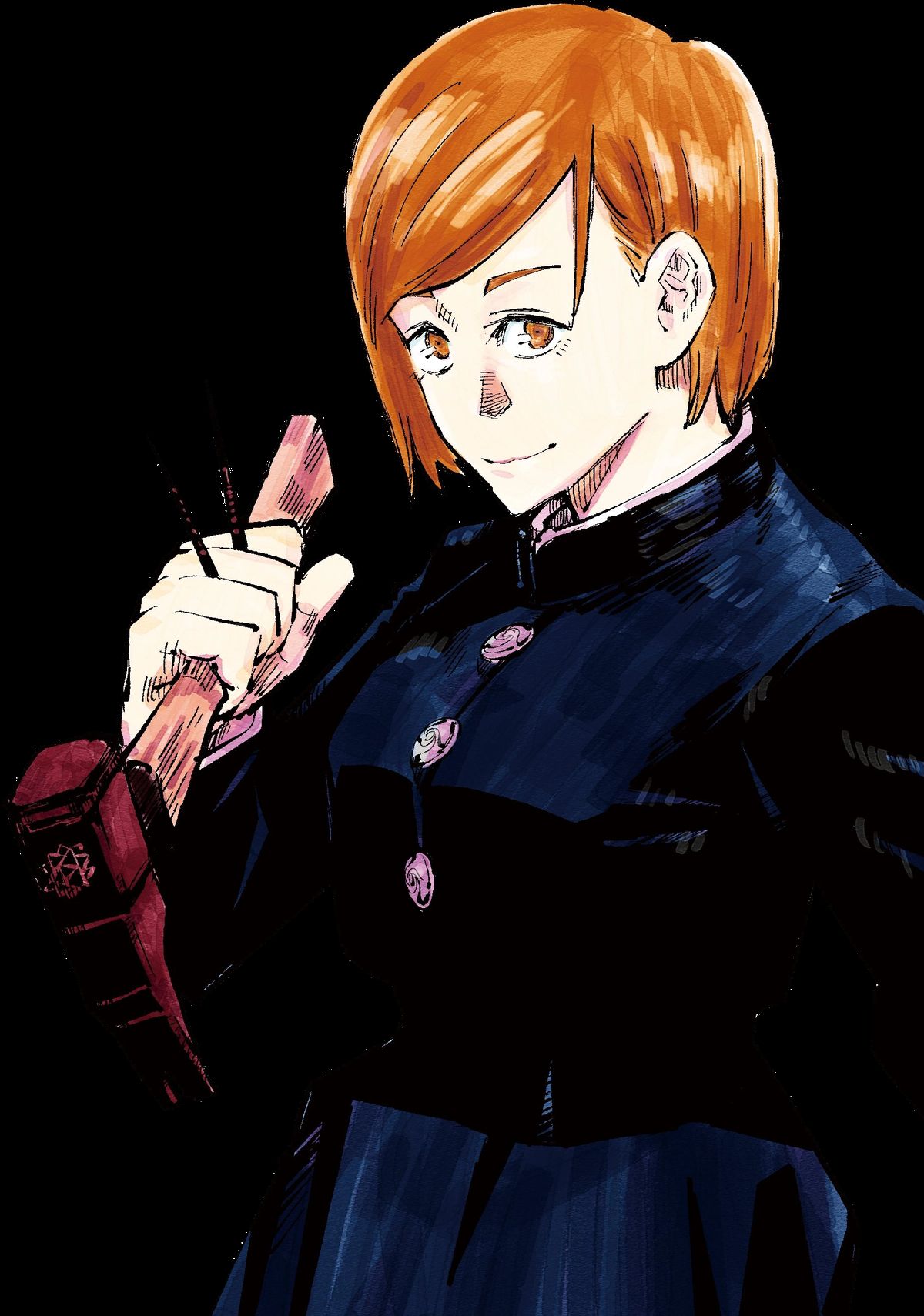
Nobara's character design by Gege Akutami is deliberately stylish and fashion-forward, reflecting her confident, no-nonsense personality. She has short orange hair cut in an asymmetrical bob with a hairpin on one side, and striking amber-brown eyes. Her features are sharp and angular, giving her an intense, focused expression even at rest. Unlike the standard uniform worn by Yuji and Megumi, Nobara personalizes her look: she wears the Tokyo Jujutsu High jacket open over a fitted top, with the sleeves often rolled up for combat convenience. Her most distinctive accessories are her hammer and nails — she carries a wooden mallet wrapped in cloth and a pouch of cursed nails, both integral to her combat technique.
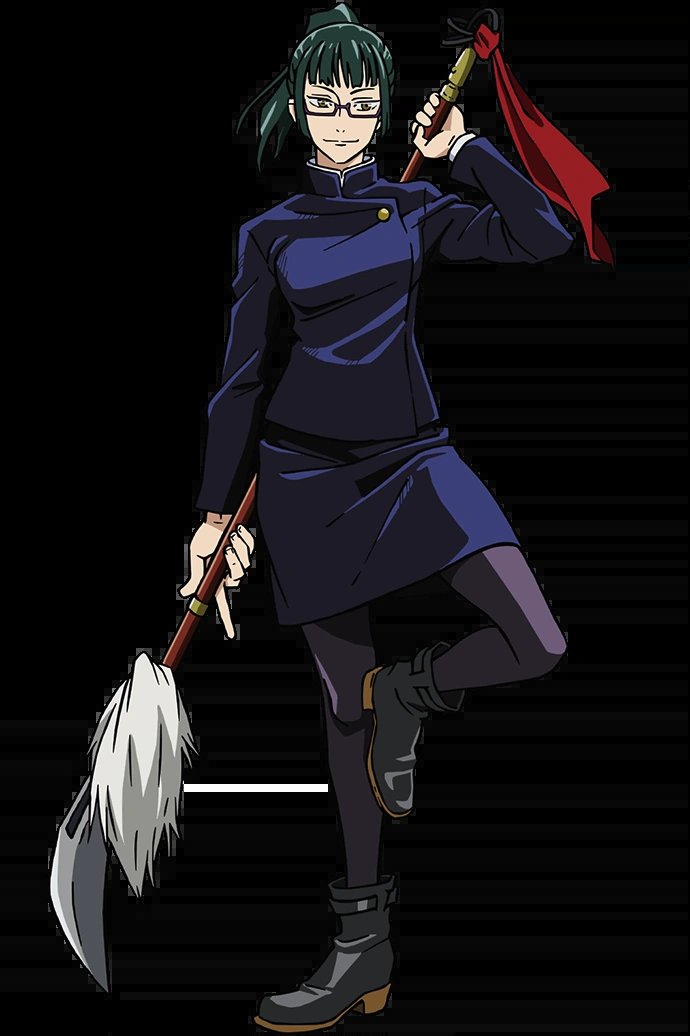
The design emphasizes her role as a close-to-mid-range combatant. Her rolled-up sleeves and practical footwear signal her readiness for immediate action, while her hammer is visually reminiscent of a construction tool, grounding her technique in mundane objects rather than exotic weapons. Her fashion sense is a key part of her identity: in casual scenes, she wears crop tops, skirts, and accessories that other female characters in the series do not. This styling is not for fan service but a deliberate statement — Nobara dresses for herself, and her appearance communicates that she is comfortable in her own skin. Compared to Maki Zenin, who wears practical combat gear with no adornment, Nobara's fashionable aesthetic is part of her philosophy that one can be both strong and feminine.
Personality Analysis
Nobara's most defining trait is her absolute self-confidence, which she articulates as a conscious philosophy rather than mere bravado. When she is introduced in Chapter 4, she tells Gojo during her interview that she moved to Tokyo because she "wanted to live a flashy life." This is not vanity — it is a declaration of agency. Nobara comes from a small, rural village where women are expected to be quiet and accommodating. Becoming a jujutsu sorcerer is her act of rebellion against those expectations. Her self-confidence is earned, not performative — she has the combat skills to back up her attitude, and she knows it. This distinguishes her from characters who boast without substance.
Her ruthlessness in combat is balanced by genuine care for her friends. During her fight against Eso and Kechizu (Chapter 64), Nobara takes a devastating hit from the brothers' Rot technique, losing her left eye. Her reaction is not panic but calculation — she immediately uses her own blood as a medium for Resonance to turn the attack back on her enemies. This moment encapsulates her entire combat philosophy: use everything, including your own suffering, as a weapon. After the fight, when Yuji apologizes for not protecting her, she rejects his guilt outright. "I don't need protecting," she tells him. "I chose this life."
Her personality is also defined by her pragmatism. Unlike Yuji, who agonizes over the morality of killing, Nobara accepts that killing curses — and sometimes curse users — is part of the job. She does not derive pleasure from violence, but she does not let guilt slow her down either. This makes her the most emotionally stable member of the trio. Where Yuji carries the weight of every life he touches and Megumi doubts his own worth constantly, Nobara is simply herself: confident, capable, and unburdened by existential questions.
Abilities and Combat System
Nobara's Straw Doll Technique is a cursed ability rooted in sympathetic magic — the principle that damage done to a representative medium can be transferred to the actual target. She uses a straw doll effigy as her primary medium, imbuing cursed nails with her energy before hammering them into the doll. When the nails strike the doll, the corresponding damage manifests on her actual target. This technique bypasses conventional cursed energy defenses because the damage does not travel from Nobara to the target through cursed energy — it is applied simultaneously via the medium. This makes her attacks extremely difficult to block or counter, as shown in her fight against Momo Nishimiya during the Kyoto Goodwill Event (Chapter 46), where Momo's ranged attacks are useless against Nobara's direct-damage transfer.
Resonance is Nobara's most powerful technique. It requires a piece of the target, such as blood, hair, or flesh, which she attaches to her straw doll. Once connected, any damage she inflicts on the doll is magnified and transferred to the target's vital areas. Against Eso (Chapter 65), she uses her own blood — spilled during the fight — as the connection medium, turning Eso's successful attack into a fatal vulnerability. The limitation of the Straw Doll Technique is its preparation requirement: Nobara needs her hammer, nails, and straw doll ready before combat. If she is disarmed or caught without her tools, she is significantly less effective. She compensates by carrying multiple nails and dolls in her pouch, but she cannot summon them — once they are gone, they are gone.
Hairpin is a secondary application where Nobara imbues multiple nails with cursed energy and scatters them as area-denial explosives. When she detonates them remotely, the nails explode with concentrated cursed energy, creating a minefield effect. This technique is ideal for controlling the battlefield and forcing enemies into predictable positions. She is also capable of using Black Flash, having landed one during the Kyoto Goodwill Event, though it is not her primary fighting style. Compared to Yuji's close-quarters pressure and Megumi's strategic shikigami play, Nobara's combat style is mid-range control with devastating single-target elimination potential. She excels in team battles where Yuji or Megumi can pin an enemy down while she sets up a Resonance strike.
| Ability | Type | First Used | Power Level |
|---|---|---|---|
| Straw Doll Technique | Sympathetic Magic | Chapter 4 | High |
| Resonance | Damage Transfer | Chapter 64 | Very High |
| Hairpin | Cursed Explosives | Chapter 46 | Medium |
| Black Flash | Spatial Distortion | Chapter 47 | High |
| Cursed Energy Bolt | Ranged Strike | Chapter 4 | Low |
Key Story Arcs
Introduction and Team Formation (Chapters 4-8): Nobara arrives at Tokyo Jujutsu High and is immediately established as Yuji's equal. Her first mission with the team involves exorcising a curse at a local hospital, where she demonstrates her Straw Doll Technique for the first time. She and Yuji bond instantly over their shared straightforwardness, while her dynamic with the more reserved Megumi is cooler but respectful.
Vs. Eso and Kechizu (Chapters 61-66): This arc is Nobara's most significant solo character moment. She and Yuji are sent to exorcise two Death Painting Wombs, brothers Eso and Kechizu. During the fight, Nobara is struck by Eso's Rot technique, losing her left eye and suffering severe internal damage. Rather than retreating, she uses her own blood on her straw doll to establish Resonance, then asks Yuji to hold Eso in place. The coordinated attack — Yuji pinning Eso while Nobara drives a nail through her doll — kills Eso instantly. This fight establishes Nobara as one of the most ruthless and effective fighters in her grade.
Kyoto Goodwill Event (Chapters 42-58): Nobara participates in the team competition against Kyoto Jujutsu High. She faces off against Momo Nishimiya, a Kyoto student who mocks Nobara for being a country girl trying to live a glamorous life. Nobara's response is to defeat Momo decisively while delivering her philosophy: "I like myself. I don't need your approval." This arc also features the first team-up between the three Tokyo first-years against Kyoto students, showcasing their developing teamwork.
Shibuya Incident (Chapters 83-136): Nobara's role in the Shibuya Incident is tragically limited. She is dispatched to assist in the evacuation of civilians and encounters Mahito, who has copied the Transfiguration technique. Mahito strikes her in the face with a transfigured hand that has Idle Transfiguration active. The last panel of Nobara shows her collapsed with her left eye destroyed, an image that the series has left ambiguous. Her current status — alive or dead — remains one of the most debated questions among fans. Narratively, her absence from the Culling Game and Shinjuku Showdown arcs has been felt deeply, as Yuji and Megumi have had to fight without her stabilizing presence.
Character Relationships
Yuji Itadori — Best Friend and Equal: Nobara and Yuji share the most naturally compatible relationship in the series. They are both straightforward, emotionally honest, and supportive of each other without jealousy. Their banter during missions is playful but never mean-spirited. When Yuji blames himself for her injury against Eso and Kechizu, Nobara refuses to accept his guilt, telling him, "I can take care of myself. You focus on your own fights." This mutual respect without dependency is rare in shonen dynamics.
Megumi Fushiguro — Teammate with Healthy Distance: Nobara and Megumi do not have the same easy chemistry as she has with Yuji, but their dynamic is functional and respectful. Megumi's cautious, analytical style balances Nobara's aggressive approach. She respects his strategic mind and he respects her combat effectiveness. They do not need to be close friends to work well together — they trust each other's competence.
Satoru Gojo — Teacher and Enabler: Gojo personally recruited Nobara, recognizing her potential during her initial interview. Unlike his more hands-on mentoring of Yuji and Megumi, he gives Nobara more independence, trusting her instincts and combat judgment. This suits Nobara perfectly — she does not need a guiding hand; she needs someone to point her in the right direction and let her loose.
Maki Zenin — Fellow Female Sorcerer: Although they interact rarely, Nobara and Maki share a mutual respect as women in a male-dominated field. Maki's all-business approach and rejection of the Zenin Clan's patriarchal structure resonate with Nobara's own rebellion against rural gender expectations. Their brief team-up during the Kyoto Goodwill Event shows them operating seamlessly together without needing verbal coordination.
Saori — Childhood Friend: Nobara's motivation to leave her village was inspired by her childhood friend Saori, a city girl who was ostracized by the village for being different. Nobara defended Saori and in doing so learned that the village's narrow-mindedness was not something she wanted to accept. This backstory, revealed briefly, grounds Nobara's confidence in a specific personal history — she learned self-love because she saw what happened to people who let others define their worth.
Cultural Impact and Fan Reception
Nobara Kugisaki has been widely praised as one of the best-written female characters in modern shonen manga. Critics and fans alike have highlighted her independence, her refusal to be defined by her relationship to male characters, and her philosophy of self-love as a radical departure from the self-sacrificing female archetypes common in the genre. On r/JujutsuKaisen, Nobara's character is frequently discussed in the context of her absence from the post-Shibuya arcs — the "Nobara is alive" versus "Nobara is dead" debate is one of the most persistent fan discussions, with theories analyzing panel details, Mahito's technique mechanics, and author interview statements for any clue about her fate.
In official popularity polls, Nobara has consistently ranked in the top five Jujutsu Kaisen characters, often placing just behind Gojo, Megumi, and Toji. Her merchandise — including a popular scale figure by Kotobukiya and multiple prize figures from Bandai — sells well, particularly among female fans who appreciate her representation. The "Nobara vs. Momo" fight in Season 1 of the anime adaptation became a talking point for its feminist subtext, with Nobara explicitly rejecting the idea that women need to prove their worth to men. Her catchphrase "I like myself" has become a meme and a slogan on fan merchandise, symbolizing the character's broader cultural resonance as an icon of self-confidence.
Frequently Asked Questions
Q: Is Nobara Kugisaki dead?
Nobara's status is currently unknown. She was struck by Mahito's Idle Transfiguration during the Shibuya Incident (Chapter 125), which appeared to be fatal. However, the series has never confirmed her death, and several contextual clues — including the lack of a funeral scene and narrative symmetry with other characters — suggest she may still be alive. As of the Shinjuku Showdown arc, Nobara has not reappeared, making her fate one of the series' longest-standing mysteries.
Q: How does Nobara's Resonance technique work?
Resonance uses sympathetic magic: Nobara attaches a piece of her target (blood, hair, or flesh) to a straw doll. When she drives a cursed nail into the doll, the corresponding damage is transferred directly to the target's body. The damage is magnified and targets vital areas because the connection is based on the target's own matter. This technique bypasses cursed energy defenses because the damage does not travel through cursed energy — it is applied simultaneously on both the doll and the target.
Q: Why did Nobara leave her village to become a sorcerer?
Nobara left her village because she wanted a "flashy life" — a deliberate rejection of the quiet, conformist existence expected of women in her rural hometown. Her decision was influenced by her childhood friend Saori, who was bullied by the villagers for being different. Nobara defended Saori but realized she could not change the village's mindset. Becoming a jujutsu sorcerer in Tokyo was her way of choosing her own path rather than accepting the one others had planned for her.
Q: Is Nobara stronger than Maki Zenin?
Nobara and Maki have different fighting styles that make direct comparison difficult. Maki is a close-quarters combat specialist with superhuman physical abilities (after her Heavenly Restriction was fully realized), while Nobara is a mid-range technique user with devastating single-target damage. In a direct fight, Maki's speed and physicality would likely give her an edge. However, Nobara's Resonance could theoretically one-shot Maki if she secured a blood connection first.
Q: What does Nobara's name mean?
Nobara's name translates to "wild rose" in Japanese — 野 (no/wild) and 薔薇 (bara/rose). The name fits her character perfectly: a rose is beautiful but thorny, and Nobara is stylish and feminine but sharp and dangerous when provoked. Her surname Kugisaki (釘崎) roughly translates to "nail promontory," referencing her signature weapon — cursed nails driven by her hammer.