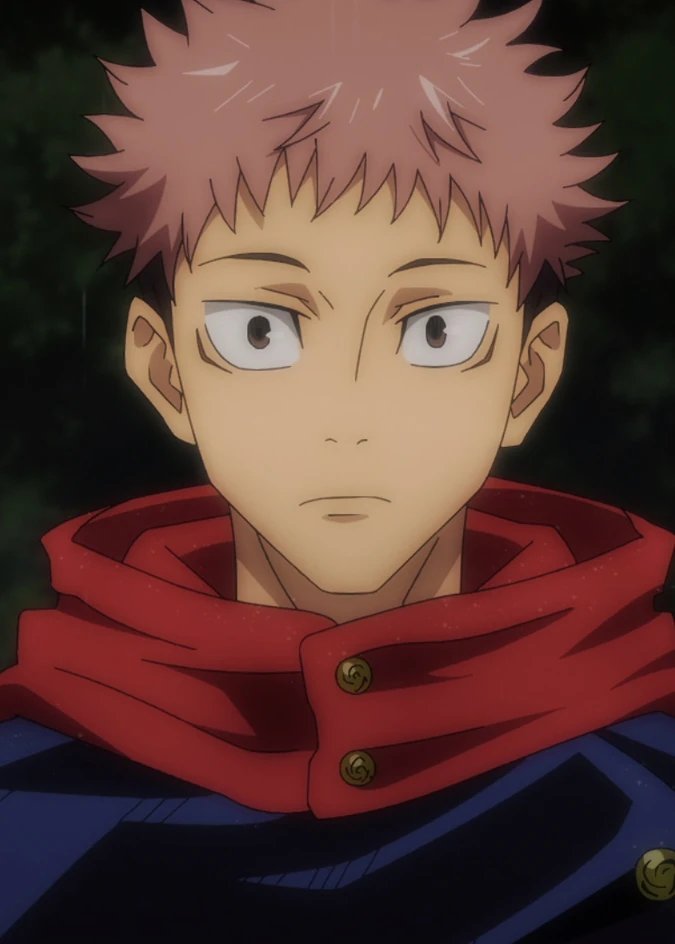
Vs. Mahito Arc Guide
Junpei Arc
Complete Vs. Mahito Arc guide — Junpei's tragedy, Mahito's philosophy, and Nanami's mentorship.
Overview of the Vs. Mahito Arc
The Vs. Mahito Arc, also known as the Junpei Arc, is the first major story arc following the Introduction Arc, spanning chapters 18 through 34 of the manga. This arc marks the true beginning of Jujutsu Kaisen's darker narrative trajectory, introducing Mahito — a Special Grade Cursed Spirit who becomes Yuji Itadori's personal nemesis and one of the most disturbing antagonists in modern shonen. The arc also introduces Kento Nanami, a Grade 1 sorcerer whose mentorship profoundly shapes Yuji's development.
The arc is divided into two parallel narratives. The first follows Yuji's first solo missions as a sorcerer under Nanami's supervision, where he learns the practical realities of jujutsu work. The second follows Junpei Yoshino, a bullied teenager who becomes Mahito's test subject in a horrifying experiment about human corruption. These storylines converge in a tragic climax that establishes the philosophical stakes of the series.
The Vs. Mahito Arc is where Jujutsu Kaisen announces its refusal to follow conventional shonen storytelling. The arc's resolution is not triumphant — it is devastating. The villain does not lose, the protagonist cannot save everyone, and the innocent die despite all efforts to protect them. This arc establishes the pattern that defines the series: good intentions do not guarantee good outcomes. For a complete chapter breakdown, visit the Vs. Mahito Arc page.
Junpei's Tragedy & Radicalization
Junpei Yoshino is introduced as a lonely high school student who is brutally bullied by his classmates. Isolated and resentful, Junpei finds solace in movies about revenge — particularly horror films where the bullied rise up to destroy their tormentors. His mother, the only person who genuinely cares for him, works late hours and is unaware of the depth of her son's suffering. Junpei is a portrait of vulnerability, a neglected child who has been failed by every adult in his life.
Mahito recognizes Junpei's potential as both a weapon and an experiment. Approaching Junpei as a friend, Mahito validates his resentment and feeds his desire for revenge. Under Mahito's influence, Junpei develops a cursed technique — one that allows him to poison others through jellyfish-like shikigami. More terrifyingly, Mahito teaches Junpei to use a Domain Expansion, making him a genuine threat despite his recent awakening as a sorcerer.
Junpei's radicalization is a chilling portrayal of how vulnerability can be weaponized. Mahito does not force Junpei to become a killer — he simply gives Junpei permission to act on the hatred that was already there. The tragedy is that Junpei was not inherently evil; he was a broken child who was offered friendship by the only person who seemed to understand him, and that person happened to be a monster.
The climax of Junpei's story is devastating. Yuji reaches out to Junpei with genuine empathy, offering him the friendship and understanding he never had. For a brief moment, Junpei seems to reconsider. But Mahito, unwilling to lose his experiment, kills Junpei's mother and transforms Junpei into a deformed cursed creature. Yuji is forced to kill the monster that was once a boy he was trying to save. Junpei's final moments are a wordless exchange with Yuji — a shared understanding that Junpei was failed by everyone, and that his death is a tragedy without justice.
Mahito: The Curse of Human Hatred
Mahito is a Special Grade Cursed Spirit born from the collective fear and hatred humans feel toward one another. Unlike the other disaster curses who represent fears of natural phenomena (volcanoes, forests, oceans), Mahito embodies an exclusively human evil — the capacity for cruelty against our own kind. His birth during the height of human conflict in the modern era makes him uniquely attuned to the worst aspects of humanity.
Mahito's cursed technique, Idle Transfiguration, is one of the most horrific abilities in the series. It allows him to manipulate the shape of the soul, which in turn reshapes the body. Because the soul predates the body in Jujutsu Kaisen's metaphysics, Mahito's technique can transform any human into any form he desires. He creates transfigured humans — grotesque monsters twisted from ordinary people — as both weapons and living art installations. The technique works instantly on ordinary humans; only sorcerers who can perceive their own soul can resist.
Mahito's philosophy is the ideological core of the arc. He believes that curses, as beings born from human negativity, are the true inheritors of the world. Humans are merely raw material — fuel for the evolution of curses. His experiments on humans are not motivated by malice in the traditional sense, but by genuine curiosity. He wants to understand the nature of the soul, the limits of transformation, and the meaning of existence itself. His intellectual detachment from the suffering he causes makes him more terrifying than any rage-driven villain.
Mahito's ability to evolve is his defining trait. Unlike other curses whose power is relatively static, Mahito grows stronger through each battle. When he experiences the techniques of others through his transfigured bodies, he develops new applications for Idle Transfiguration. This adaptive evolution makes him a constantly escalating threat — every encounter with Mahito creates a more dangerous Mahito for the next encounter. For a complete breakdown of his abilities, see the Idle Transfiguration wiki page.
Nanami's Mentorship & The Reality of Jujutsu
Kento Nanami is introduced as a Grade 1 sorcerer who previously worked as a salaryman in a corporate office. His background gives him a unique perspective among sorcerers — he has experienced the mundane world and chosen to return to jujutsu not out of idealism, but out of a pragmatic recognition that sorcery is where he can make a meaningful difference. Nanami's worldview is shaped by his belief that work should be meaningful and that adults protect children from having to face the worst of the world too soon.
Nanami's cursed technique, the Ratio Technique, reflects his methodical personality. By dividing any target into a 7:3 ratio, he creates a weak point that magnifies the damage of his strikes. His binding vow, Overtime, increases his cursed energy output during overtime hours (after 6 PM) — a practical application of his salaryman experience. These techniques are not flashy or overwhelming; they are tools of a craftsman who has mastered his trade through discipline and experience.
As Yuji's mentor, Nanami teaches him the most important lesson of jujutsu sorcery: that the work is about giving people proper deaths. Nanami explains that sorcerers are not heroes who save everyone — they are professionals who ensure that those who die do so with dignity. This philosophy of "proper death" becomes the moral framework that guides Yuji throughout the series. Nanami also teaches Yuji about burnout, the importance of self-care, and the danger of carrying the world's weight alone.
Pro Tip: Nanami's role as a mentor is deliberately contrasted with Gojo's. Gojo is the idealized teacher who believes his students can surpass him. Nanami is the realistic teacher who wants to keep his students alive long enough to grow up. Yuji needs both perspectives, but it is Nanami's pragmatism that saves Yuji's life during their missions together. Nanami's "You've got it from here" in Shibuya is the culmination of everything he taught Yuji.
The First Yuji vs. Mahito Confrontation
The arc's climax brings Yuji face to face with Mahito for the first time. Yuji is already emotionally devastated by Junpei's death — the boy he tried to save has been twisted into a monster and killed by Yuji's own hands. When Yuji realizes that Mahito was the architect of Junpei's corruption, his grief transforms into cold fury. The confrontation that follows is not just a physical battle but a clash of philosophies.
Mahito toys with Yuji during their initial exchange, using his transfigured humans as shields and weapons. Yuji's raw strength and cursed energy reinforcement allow him to keep pace, but Mahito's ability to reshape his own body makes him nearly impossible to land a decisive hit on. The fight demonstrates the fundamental difference between a trained sorcerer and a cursed spirit — Mahito operates on instinct and evolution, while Yuji fights with technique and conviction.
The battle reaches its peak when Mahito lands Idle Transfiguration on Yuji. However, Yuji's connection to Sukuna creates a unique defense — Sukuna's soul within Yuji is strong enough to resist manipulation. When Mahito attempts to reshape Yuji's soul, Sukuna's overwhelming presence forces Mahito's technique to fail, shocking the curse who believed his ability was absolute. This failure plants the first seed of doubt in Mahito's philosophy: perhaps being born from human hatred does not make curses superior to humans.
Nanami arrives to extract Yuji, recognizing that the mission has exceeded what two sorcerers can handle alone. The arc ends not with a victory but with a strategic retreat. Mahito escapes to fight another day, Yuji carries the trauma of Junpei's death, and the reader understands that this conflict is far from over. The Yuji vs. Mahito rivalry is established as the emotional core of the series, a hatred that will only deepen with each subsequent encounter.
Thematic Analysis & Narrative Foundations
The Vs. Mahito Arc establishes several thematic pillars that support the entire series. The most important is the concept of a "proper death" — Nanami's philosophy that sorcerers exist not to defeat curses but to ensure that human deaths retain meaning and dignity. This theme directly connects to Yuji's grandfather's dying words and becomes Yuji's moral compass throughout increasingly dark circumstances.
The Nature of Humanity: Mahito and Yuji represent opposing views of humanity. Mahito believes humans are fundamentally corrupt, that the hatred they feel for each other proves they deserve extinction. Yuji believes that even flawed, broken people deserve compassion and protection. Junpei's tragedy tests both philosophies — Mahito proves he can corrupt an innocent, but Yuji proves that even a corrupted soul can be reached with genuine empathy. The arc refuses to declare either philosophy fully correct.
Foundations for Future Arcs: This arc establishes critical narrative elements that pay off in later storylines. Mahito's evolution ability foreshadows his role in the Shibuya Incident, where he achieves a Domain Expansion and nearly destroys the sorcerer resistance. Nanami's relationship with Yuji makes his death in Shibuya emotionally devastating. The concept that Sukuna's soul protects Yuji from soul manipulation becomes a crucial plot point. Junpei's story also establishes the pattern of tragedy that defines Jujutsu Kaisen — the series does not save the innocent; it forces the protagonists to carry the weight of those they failed to save.
The arc also introduces the broader conflict between the disaster curses and the sorcerer world. Mahito's alliance with Jogo, Hanami, and the mysterious Kenjaku is hinted at but not yet revealed. The reader understands that Mahito is not acting alone and that a larger plan is in motion. The Vs. Mahito Arc is the first chapter in a war that will escalate through the Kyoto Goodwill Event and culminate in the Shibuya Incident.
Frequently Asked Questions
What is the Vs. Mahito Arc in Jujutsu Kaisen?
The Vs. Mahito Arc covers chapters 18-34 of the manga, introducing Mahito as a primary antagonist, following Junpei Yoshino's tragic corruption, and establishing Nanami as Yuji's mentor.
Who is Junpei Yoshino and why is his story important?
Junpei Yoshino is a bullied high school student manipulated by Mahito into becoming a curse user. His story demonstrates how vulnerability can be weaponized and establishes the series' refusal to provide happy endings. Junpei represents what Yuji could have become without positive influences.
What is Mahito's cursed technique?
Mahito uses Idle Transfiguration, which allows him to reshape souls and thus bodies at will. He can transform humans into monsters, heal himself by reshaping his soul, and evolve his abilities by experiencing new techniques.
What does Nanami teach Yuji during this arc?
Nanami teaches Yuji that a sorcerer's role is to ensure people receive proper deaths. He imparts pragmatic wisdom about burnout, self-care, and the importance of protecting the next generation. His mentorship shapes Yuji's worldview throughout the series.
What chapters and episodes cover the Vs. Mahito Arc?
The Vs. Mahito Arc covers chapters 18 through 34 of the manga and episodes 9 through 12 of the anime adaptation.